

AI in Fleet Management: Game Changer or Just More Hype?
The transportation and logistics industry is being flooded with AI-powered fleet management systems capable of automating tasks once handled entirely by people.
Composing emails? Done. Handling inbound and outbound calls? Bots can manage that too.
However, a healthy dose of skepticism is still warranted when evaluating AI systems that replace human judgment in core fleet operations.
Recently, the model for freight procurement and load planning has shifted towards autonomy with the emergence of a new category of fleet management software: Decision-Native Agentic Systems (DNAS).
DNAS combines decision-optimization engines with specialized AI agents that evaluate and execute freight-network decisions in real time, including freight procurement and load planning.
The financial impact is impossible to ignore, even for the most skeptical fleet executives.
What AI in Fleet Management Actually Means
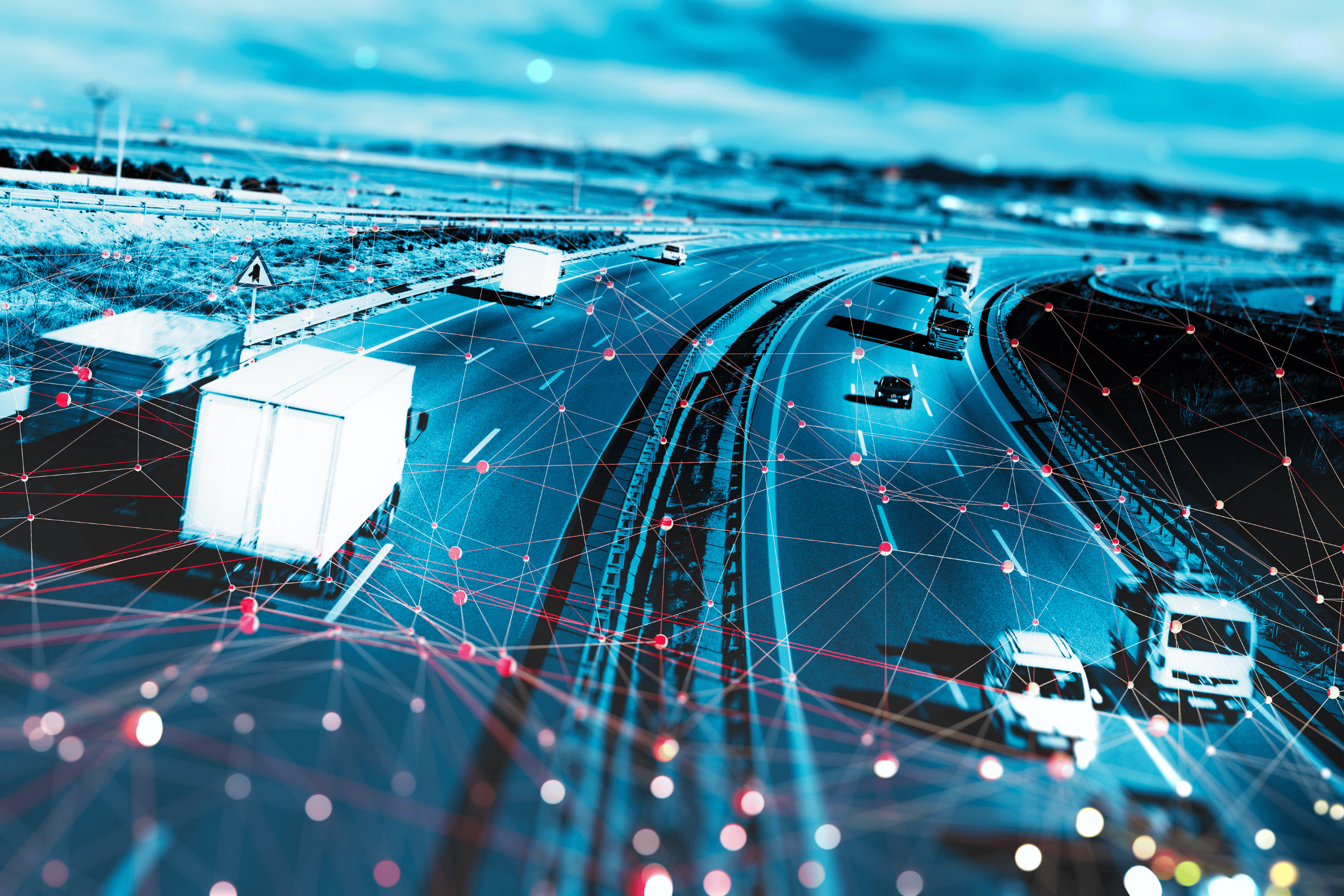
AI-powered systems in fleet management run the gamut from safety and maintenance to dispatch. Most of these systems go beyond providing visibility tools and reporting platforms that monitor activities and support decision-making.
AI agents, among other advancements, are helping fleets automate tasks. But for core fleet operations such as freight procurement and load planning, many companies still rely on human decisions and manual processes.
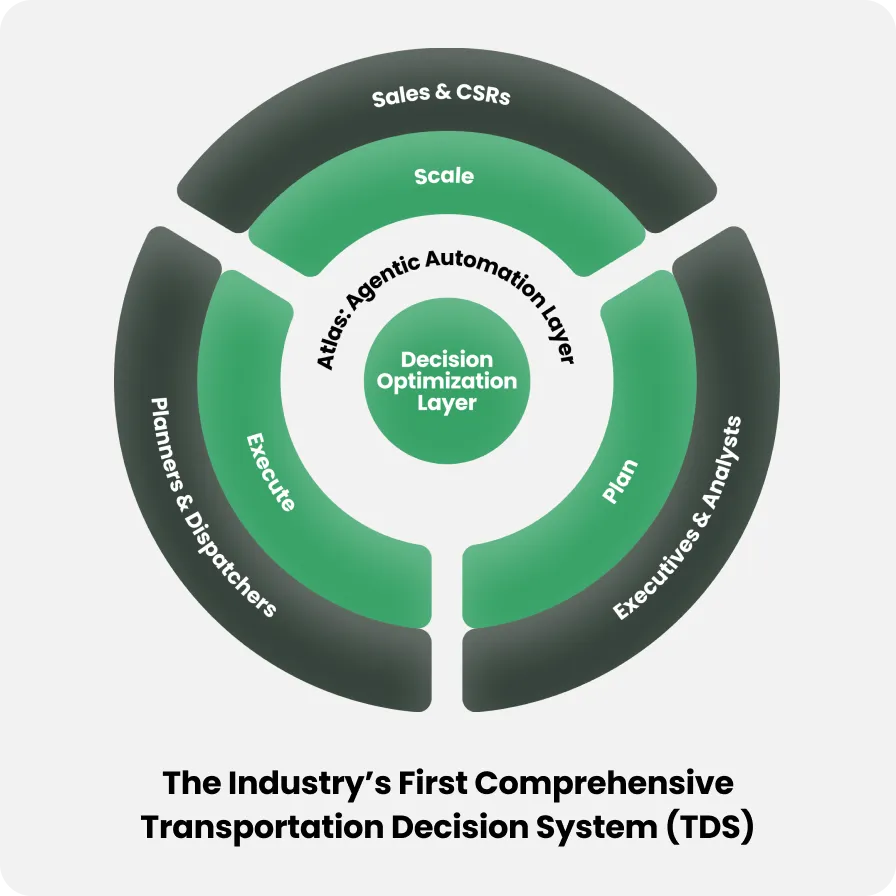
The shift to DNAS has changed this model entirely. Instead of simply presenting information, Scale, the industry’s only DNAS solution, continuously evaluates freight opportunities, determines the best course of action, and automatically executes decisions.
This distinction matters when managing freight networks, which have grown too complex and dynamic for humans to optimize at scale.
Why Most “AI” Still Falls Short
Despite the hype, much of what the logistics industry markets as AI today remains relatively shallow, focusing primarily on visibility and automation. They generate alerts, surface trends, and automate workflows, but humans still interpret the information and manually coordinate execution.
That creates a bottleneck and is why many fleets continue to struggle even after major technology investments. In many operations, teams are overwhelmed by information while still relying on manual processes to make critical planning decisions.
AI becomes transformational when it moves beyond mere visibility to autonomously make and execute network-aware decisions.
Human-Led Freight Procurement and Planning Has Reached Its Limits
Truckload operations require hundreds or even thousands of interconnected decisions every day. Freight decisions made by customer service representatives (CSRs) and load planners cannot possibly account for every variable affecting network profitability in real time.
CSRs can evaluate only one freight opportunity at a time and have no visibility into the downstream impact of those decisions.
A single decision to accept a load or dispatch a driver creates inefficiencies hundreds of miles away and hours later, negatively affecting revenues and costs through poor driver positioning, equipment utilization, customer service performance, and network imbalance.
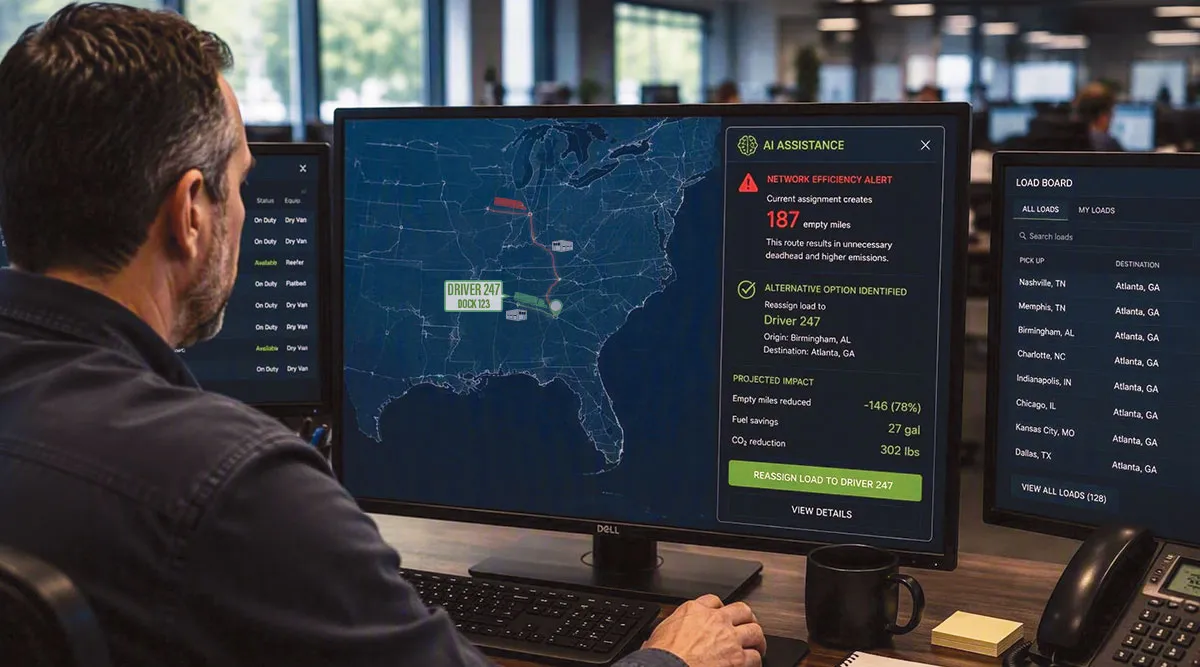
This is where AI-driven decision systems create measurable value. With an embedded network-aware decision engine, Optimal Dynamics’ DNAS continuously evaluates all opportunities and operational variables to optimize freight sourcing and planning decisions.
It continuously evaluates the network and optimizes decisions in real time by considering future driver and asset positioning, freight probabilities, network balance, profitability, and service performance, all while adapting to changing conditions.
The goal is to autonomously make decisions and execute at scale, significantly increasing profitability and removing operational bottlenecks.
The Shift From Visibility to Decision Automation
Traditional AI agents primarily follow instructions within rule-based systems, such as automatically accepting load tenders in accordance with predefined customer commitments.
A DNAS operates completely differently.
Instead of following static rules, it evaluates tradeoffs dynamically to determine whether accepting a load improves overall network profitability, where repositioning equipment will reduce empty miles and create stronger freight opportunities, and whether short-term gains will introduce downstream operational risks.
This changes the role of CSRs and load planners entirely. Rather than spending their time making repetitive operational decisions, teams move into more strategic and supervisory roles focused on customer relationships, exception management, and long-term planning.
Fleets gaining the greatest advantage today are not simply using AI to analyze the network. They are using it to run their networks.
Is AI in Fleet Management Transformative?
That depends on the type of AI being deployed.
If AI is simply another tool automating rule-based workflows, the impact is limited. Real transformation happens when AI shapes outcomes by autonomously making and executing optimal, network-aware decisions.
Competitive advantage is now about acting on data faster and more intelligently than the competition. This shift matters in a freight market defined by volatility, labor shortages, rising operating costs, and margin pressure.
Fleets seeking to improve profitability in an increasingly complex operating environment cannot afford to overlook the advantages of next-generation AI fleet management systems.
Frequently Asked Questions
What is AI in fleet management?
The applications of AI in fleet management are many. They include driver risk management, route optimization, predictive maintenance, dispatch planning, and load matching.
A new category of AI software, called Decision-Native Agentic Systems (DNAS), has emerged that autonomously makes and executes operational decisions for freight procurement and load planning, guided by the full context of the existing freight network.
Does AI save money for fleets?
Yes. The latest advancement in AI fleet management systems, DNAS, improves network profitability by autonomously sourcing better freight, reducing empty miles, improving equipment utilization, and lowering operating costs.
What’s the difference between traditional fleet software and AI?
Traditional fleet software focuses on operational visibility and decision support. AI systems go beyond visibility to deliver rule-based automation, but DNAS goes a step further by autonomously making and executing decisions across the network.
How do I know if my fleet is ready for AI?
Fleets are typically ready when they have reliable operational data and are open to automating repetitive planning and procurement decisions instead of relying entirely on manual workflows.